DMCA PROTECTED AND MONITORED

© COPYRIGHT – ALL RIGHTS RESERVED. This site is protected and monitored by DMCA.COM - ANY UNAUTHORIZED Reproduction, Duplication, Distribution of any kind is STRICTLY PROHIBITED. All original content is created by the website owner, Barron Shepherd, including but not limited to text, design, code, images, photographs and videos are considered to be the Intellectual Property of the website owner, Barron Shepherd, whether copyrighted or not, and are protected by DMCA Protection Services using the Digital Millennium Copyright Act Title 17 Chapter 512 (c)(3). Direct linking, reproduction or re-publication of this content is prohibited without permission. Under 17 U.S.C section 101 et seq. those who violate the DMCA could be liable for statutory damages as high as 150,000.00 as set forth in section 504(c)(2) therein.

Sunday, January 24, 2016

THE REALITY OF KNIFE ATTACKS

Most recently I wrote an article explaining a brutal knife attack a friend of mine had suffered. He was attacked from behind and it was fast, furious.bloody and brutal. http://kogaryuninjutsuint.blogspot.com/2016/01/the-too-real-reality-of-knife-attack.html  He was stabbed and cut 14 times, was in a coma and had more stitches in him than I wanted to count. The article elicited a lot of comments and remarks some had great advice others not so much. Personally and being someone that practices combat training with the knife, the outcome is never good for the victim from a determined attacker.

In this case my friend was attacked from behind and I know hindsight is 20/20 and every “internet master knife fighter” and his brother has an opinion,  but I cant emphasize enough to be aware of your surroundings always. If possible leave quickly or try to arm yourself with a weapon that'll keep distance between you and your assailant (bo/mop,shovel,broom etc) and definitely keep moving.   I keep in my mind the 21 foot rule regarding drawing my handgun, and if its imminent just be mindful of your vital areas because you're gonna get cut, stabbed or both.

From my experience almost all knife attackers use short, quick stabbing and slashing motions and not big movements, making most of the knife disarm techniques taught by martial artists useless.... So, instead of talking about a lot of crap concerning so-called unarmed "knife" defenses,  I want to look at reversing the roles.

Instead of looking at it from the defender’s point of view let’s assume the "role" of the attacker. The mind set and the weapon of choice. The attackers choice of weapon…a knife.  A knife is up close and personal, ferocious and brutal. You have to close on your victim and physically, violently and with extreme prejudice stab,slash, and hack him to bits. A knife is about as personal, ruthless brutal and deadly as it gets. It's not like a gun, which which has an element of detachment.

We are still assuming the role of the attacker so your attack will be a frenzy of hate,rage and murderous intent. You more than likely aren’t going to fake a move or feint with your knife, you aren’t sparring with your blade, you damn sure wont be "half-stepping" with your knife. You  are going to attack with mindless brutal and ruthless rage and do ANY and EVERYTHING that will finish your victim off in as ferocious a manner as inhumanly possible. Murderous intent, rage, hate and adrenaline are fueling you to an almost superhuman state of frenzied violence.  Even when your man goes down you still keep stabbing and slashing away. In the case of my friend a bystander who was a legal firearms carrier pulled a  gun on the attacker. Only then was the attacker stopped.


FACE THE FACTS!!! This is what REALLY happens when one human being uses a knife on another. Too many are playing knife gymnastics without really realizing what an knife wielding assailant has in store for them. It isn’t going to be pretty! Are you REALLY preparing to DEAL with something like this?

Wednesday, January 20, 2016

JUDO'S NINJA

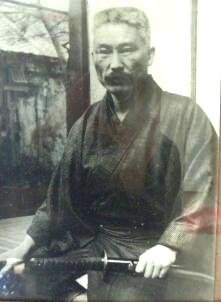
RYOHEI UCHIDA
PHOTO PRVIDED BY UCHIDA FAMILY

Ryohei Uchida was born in Fukuoka prefecture. He was the son of Shinto Muso-ryu practitioner Uchida Ryōgorō, and from an early age was interested in many forms of Japanese traditional martial arts, including kyudo, kendo, judo and sumo. In 1895, he attended the Toyogo University, where he studied the Russian language and in 1897, made a trip to Siberia.

It was 1903, and in less than a year, Japan and Russia would be at war. Russian intelligence officers would have paid dearly for information that Ryohei Uchida was in Vladivostok, Russia and that Japan's first overseas judo dojo, the Urajio, was in reality a secret headquarters for the spy activities of The Kokuryu-kai (the Black Dragon Society).

The dojo in Vladivostok was run by six hand picked men by Ryohei Uchida to specifically cater to young Russian military officers by exposing them to the new Japanese art of judo and hopefully gain access onto the military base under the guise of instructing officers in judo.

In all the annals of Japanese history there has been nothing more mysterious and sinister than this secret organization. The Kokuryu-kai flourished as a special headquarters for espionage, sabotage, revolution, intimidation and assassination.

Known to a relative few in Japan, and then only by the innocuous name of the Amur River Society, the Kokuiyu-kai was founded in 1901 by Ryohei Uchida. In the 40 years of its shadowy, cloak-and-dagger existence, the long hand of the Black Dragon Society could be found in wars and revolutions, the assassination of a queen and the abdication of an emperor, the murder of prime ministers, the overthrow of cabinets, the intimidation of statesmen, the annexation of foreign colonies and the operation of extensive overseas spy rings. It even organized and financed Manchurian bandits, Korean fanatics and Filipino revolutionaries.

Uchida was the descendant of a long line of samurai, one of whom had been exiled to an offshore island for his rebellious nature. His father, Ryogoro Uchida, served in the Kuroda clan as a bushi in the late Edo Period, and it was from his father that the young Uchida developed an ambition to see Japan expand into Korea.

Uchida's father Ryogoro, was quite famous in Kyushu for his skill in the martial arts, attaining great proficiency in the Itoryu School of kendo, the Shinto-Muso ryu School of jojutsu and the Kyushin-ryu school of jujitsu. Ryohei Uchida attained repute as a renowned marksman in kyudo at a very early age. He was also a fine sumo wrestler, while his father became his personal coach in kendo and jojutsu. Uchida also began to study judo.

As a youth, Uchida joined the Genyosha nationalist group and soon became the leading disciple of its founder, Toyama Mitsuru. The Genyosha was active in raising funds and agitating for a more aggressive foreign policy towards the Asian mainland. When the Donghak Rebellion began in Korea in 1894, Uchida went to Korea to help the rebels.

While in Korea Uchida had taken over the tactical operations of the Genyosha and organized a subsidiary group called Tenyuko (God-Gifted Samurai) — 12 handpicked adventurers dedicated to the task of ensuring that Japan would not be robbed of the fruits of its victory over China.

 The 12 men hand picked by Uchida created a small riot, and in the confusion, dressed as tonghaks, but wearing masks, they successfully entered the Royal house and slew the queen, Empress Myeongseong . The tonghaks, rebellious Koreans, took the blame for the incident.

By 1895 Uchida was in Tokyo at Toyogo University studying Russian. He also worked out at the Kodokan and established a special relationship with shihan Jigoro Kano. Ryohei achieved the rank of go-dan, and some years later became master of the Keio University Judo Club. His father not only continued to coach him daily in jojutsu, but also found time to teach Navy men and police in the art of the short stick.

The young Uchida also played a part in organizing the first judo dojo in Kyushu together with Jigoro Kano in 1897. Called "Tenshinkan," it was headed by a colleague of Uchida named Hyozo Chiba who later became the first instructor to visit the U.S. to teach judo. Needless to say, the young volunteers who would comprise the newly formed Dark Oceean Society and later the membership of  the Black Dragon Society were given a thorough indoctrination in the martial arts as well as in the ultra-nationalistic philosophy of the two societies.
Front row Left to Right: Ryohei Uchida, K. Iizuka, Sakuzo Uchida, Ikkan Miyakawa. Back Row: Isogai, Nagaoka, Jigoro Kano (seated) Yoshitsugu Yamashita (taught Pres. Teddy Rosevelt Judo).
By 1901, Uchida founded the Black Dragon Society and by 1903, Uchida was sneaking around Russia and Manchuria directing his network of spies, mobilizing Manchurian bandits and Chinese guerrillas for the coming struggle against the Russians, Mitsuru Toyama formerly of the Genyosha (Dark Ocean Society) was "persuading" politicians to his way of thinking.

Toyama mapped out the policies, while Uchida directed the operations. Singly, each man was impressive and powerful in his own right, but together they made an unbeatable pair. They sent literally hundreds of their followers to Manchuria and-Siberia as secret agents.

Mitsuru Toyama was just beginning to make good headway when he suddenly locked horns with the stubborn Prince Ito who favored coming to an understanding with Russia. As the nation's leading elder statesman, Prince Ito exerted more influence on governmental policy than any other single man in Japan. Toyama realized that unless the Prince threw his support behind those advocating a war policy, there would be no war and the Black Dragon's cherished crusade of driving Russia out of all territory below the Amur River (dividing Manchuria from Russia) to make way for Japanese expansion would collapse.

UCHIDA FAMILY 50TH ANNIVERSARY OF THE FAMILY DOJO
3rd picture from the right on wall  is a portrait of Ryohei Uchida
One day in the summer of that year, 1903, Toyama and three burly judoka approached Prince Ito at his seaside villa in Oiso, some 50 miles south of Tokyo. By cajoling, flattering and threatening the Prince, Toyama was able to alter the Prince's war policy.


When war with Russia finally came in 1904, the Japanese Imperial Army took the Kokuryu-kai under its wing temporarily as an intelligence organization. Black Dragon agents were even attached to the army in the field as interpreters and guides.


The pictures used in this article are courtesy of the Uchida family

Sunday, January 17, 2016

THE TOO REAL REALITY OF A KNIFE ATTACK

Sometimes in our lives things happen to others that we know and it just hits too close to home. It makes you rethink and sometime may even be a revelation and even a turning point in your life or the way you do things or see things. Reality sets in. It makes you think. 

Recently a person I know and speak with several times thru the course of most weeks had gotten himself into a physical altercation, At first it was just a fist fight but later almost ended with someone losing their life.  Even though this particular incident took place in a bar it still raised some red flags in my mind about the training the majority of martial artist do and if it is even practical and effective in this day and time.

It was the viciousness of the attack that sent my mind spinning it made me look at how I train and prepare myself physically to confront such a overwhelming attempt to end a life.  My friend was literally stabbed and slashed 14 times by a guy who had followed him out of a bar after an altercation they had inside the bar. The attacker ran up on him from behind and began stabbing and slashing him with a knife.

My friend was in the hospital in a coma for three days both lungs had collapsed. He spent two weeks in the hospital. When I finally saw him he took off his shirt and showed me his wounds.   There were multiple stab wounds to both sides of his ribs. There were slashes that covered his back, the back of his neck and both arms. The stitches were too numerous to count. It was evident that was indeed a wild, mindless and violent attack. It was a raging, chaotic fast flurry of stab after stab and slash after slash. I look and see how most people train to defend themselves and quite honestly it just isn’t enough, and guys, it wont deal with such a vicious attack like I just described. 

Reading and learning from a book, learning from a video, larping and other systematized type practices just isn’t going to cut it. This guy didn’t make a thrust or a slash and just leave his fucking hand out there so someone could disarm him. This was a fast and furious continuous storm of knife slashes and stabs coming at you unpredictably from all directions. Forget the shit you see from larping martial artists in YouTube videos.  Live action role play on a motionless attacker who just stands there while you do your thing will not even come close. IF you aren’t training for a full blitz wild type of an attack you are dead. My friend could have very easily lost his life. The attacker now sits in jail with no bond on an attempted murder charge. 

I looked at my friend with the knife wounds all over his back, on both sides of his ribs, his neck and arms and it dawns on me now more than ever. Over my years of training in self defense, and teaching self defense I never saw any system, or style of knife defense that immediately clicked in my head as being effective.  I have seen a load of self defense instructors who teach how to analyze the knife from different angles with all these fancy, complicated, and downright ineffective techniques. Some people though seem to buy into them because they LOOK COOL. 

I found myself going back to my days in the military and then things I was taught in basic and the Military Police Corp in the mid 80’s. I DID NOT fight in a war anywhere.  I DO NOT have combat ribbons or medals.  But my stint in the military was really my first experiences in training with dealing and preparing for the possibility of a serious attack, a life or death situation.

My first exposure to Judo was in the military but the Judo taught wasn’t for sport it was for combat and survival, it was life or death. It was practical and effective. Your opponent come at you crouched and attacked you realistically. First it was done slow and by the numbers but then it progressed becoming more fluid and faster. The guy just didn’t leave his arm dangling straight out in front of your face waiting for you to react. If you missed that small window of opportunity to do something they would come at you again and again. You kept doing it till ya got it right. 

We didn’t learn a hundred and something techniques, we didn’t pull guard or fight off our backs. We didn't strike some cool movie Bruce Lee fighting pose.  It wasn’t a game it was how we prepared for what would be a life or death situation. A situation for me that keeps it all in perspective.

Sunday, November 15, 2015

RYOHEI UCHIDA : JUDO'S NINJA


Ryohei Uchida was born in Fukuoka prefecture. He was the son of Shinto Muso-ryu practitioner Uchida Ryōgorō, and from an early age was interested in many forms of Japanese traditional martial arts, including kyudo, kendo, judo and sumo. In 1895, he attended the Toyogo University, where he studied the Russian language and in 1897, made a trip to Siberia.

It was 1903, and in less than a year, Japan and Russia would be at war. Russian intelligence officers would have paid dearly for information that Ryohei Uchida was in Vladivostok, Russia and that Japan's first overseas judo dojo, the Urajio, was in reality a secret headquarters for the spy activities of The Kokuryu-kai (the Black Dragon Society).

The dojo in Vladivostok was run by six hand picked men by Ryohei Uchida to specifically cater to young Russian military officers by exposing them to the new Japanese art of judo and hopefully gain access onto the military base under the guise of instructing officers in judo.

In all the annals of Japanese history there has been nothing more mysterious and sinister than this secret organization. The Kokuryu-kai flourished as a special headquarters for espionage, sabotage, revolution, intimidation and assassination.

Known to a relative few in Japan, and then only by the innocuous name of the Amur River Society, the Kokuiyu-kai was founded in 1901 by Ryohei Uchida. In the 40 years of its shadowy, cloak-and-dagger existence, the long hand of the Black Dragon Society could be found in wars and revolutions, the assassination of a queen and the abdication of an emperor, the murder of prime ministers, the overthrow of cabinets, the intimidation of statesmen, the annexation of foreign colonies and the operation of extensive overseas spy rings. It even organized and financed Manchurian bandits, Korean fanatics and Filipino revolutionaries.

Uchida was the descendant of a long line of samurai, one of whom had been exiled to an offshore island for his rebellious nature. His father, Ryogoro Uchida, served in the Kuroda clan as a bushi in the late Edo Period, and it was from his father that the young Uchida developed an ambition to see Japan expand into Korea.

Uchida's father Ryogoro, was quite famous in Kyushu for his skill in the martial arts, attaining great proficiency in the Itoryu School of kendo, the Shinto-Muso ryu School of jojutsu and the Kyushin-ryu school of jujitsu. Ryohei Uchida attained repute as a renowned marksman in kyudo at a very early age. He was also a fine sumo wrestler, while his father became his personal coach in kendo and jojutsu. Uchida also began to study judo.

As a youth, Uchida joined the Genyosha nationalist group and soon became the leading disciple of its founder, Toyama Mitsuru. The Genyosha was active in raising funds and agitating for a more aggressive foreign policy towards the Asian mainland. When the Donghak Rebellion began in Korea in 1894, Uchida went to Korea to help the rebels.

While in Korea Uchida had taken over the tactical operations of the Genyosha and organized a subsidiary group called Tenyuko (God-Gifted Samurai) — 12 handpicked adventurers dedicated to the task of ensuring that Japan would not be robbed of the fruits of its victory over China.

 The 12 men hand picked by Uchida created a small riot, and in the confusion, dressed as tonghaks, but wearing masks, they successfully entered the Royal house and slew the queen, Empress Myeongseong . The tonghaks, rebellious Koreans, took the blame for the incident.

By 1895 Uchida was in Tokyo at Toyogo University studying Russian. He also worked out at the Kodokan and established a special relationship with shihan Jigoro Kano. Ryohei achieved the rank of go-dan, and some years later became master of the Keio University Judo Club. His father not only continued to coach him daily in jojutsu, but also found time to teach Navy men and police in the art of the short stick.

The young Uchida also played a part in organizing the first judo dojo in Kyushu together with Jigoro Kano in 1897. Called "Tenshinkan," it was headed by a colleague of Uchida named Hyozo Chiba who later became the first instructor to visit the U.S. to teach judo. Needless to say, the young volunteers who would comprise the newly formed Dark Oceean Society and later the membership of  the Black Dragon Society were given a thorough indoctrination in the martial arts as well as in the ultra-nationalistic philosophy of the two societies.

By 1901, Uchida founded the Black Dragon Society and by 1903, Uchida was sneaking around Russia and Manchuria directing his network of spies, mobilizing Manchurian bandits and Chinese guerrillas for the coming struggle against the Russians, Mitsuru Toyama formerly of the Genyosha (Dark Ocean Society) was "persuading" politicians to his way of thinking.

Front row Left to Right: Ryohei Uchida, K. Iizuka, Sakuzo Uchida, Ikkan Miyakawa. Back Row: Isogai, Nagaoka, Jigoro Kano (seated) Yoshitsugu Yamashita (taught Pres. Teddy Rosevelt Judo).
Toyama mapped out the policies, while Uchida directed the operations. Singly, each man was impressive and powerful in his own right, but together they made an unbeatable pair. They sent literally hundreds of their followers to Manchuria and-Siberia as secret agents.

Mitsuru Toyama was just beginning to make good headway when he suddenly locked horns with the stubborn Prince Ito who favored coming to an understanding with Russia. As the nation's leading elder statesman, Prince Ito exerted more influence on governmental policy than any other single man in Japan. Toyama realized that unless the Prince threw his support behind those advocating a war policy, there would be no war and the Black Dragon's cherished crusade of driving Russia out of all territory below the Amur River (dividing Manchuria from Russia) to make way for Japanese expansion would collapse.

One day in the summer of that year, 1903, Toyama and three burly judoka approached Prince Ito at his seaside villa in Oiso, some 50 miles south of Tokyo. By cajoling, flattering and threatening the Prince, Toyama was able to alter the Prince's war policy.


When war with Russia finally came in 1904, the Japanese Imperial Army took the Kokuryu-kai under its wing temporarily as an intelligence organization. Black Dragon agents were even attached to the army in the field as interpreters and guides.

Sunday, October 25, 2015

JUDO IN THE MOVIES: Close Quarters, Gun play and Judo

by Barron Shepherd


In the fast paced, bullet laden action spectacle 'John Wick' we see Keanu Reeves as a retired A-list hit man. John Wick (Keanu Reeves), has just lost his wife to an undisclosed illness,  he receives a gift from her posthumously in the form of a Beagle puppy, along with a letter from her saying she arranged for him to have the puppy to help him cope with her demise. Initially indifferent to the pup, he eventually connects with it as they spend the day driving around in his vintage '69 Mustang.

At a gas station, he encounters a trio of Russian gang members, whose leader insists on buying his car. John refuses to sell. The three follow John to his home, break in at night, and attack John kill the puppy and steal his car. Robbed of his opportunity to grieve Wick takes his revenge and It doesn't take long before the Russian gangsters wish they had crossed paths with someone else.

To portray the assassin John Wick whose very name strikes terror in the cold hearts of Russian gangsters required a 50 year old Reeves, to pull off a series of physically grueling and highly complex action scenes involving high body counts and make it all look effortless.

In preparation for his role of John Wick Reeves spent four months getting in shape and learning Judo using the practical grappling martial art and mixing in guns to create a brutal style of close-quarters combat. The result exhibits a creative simplicity that gives Reeves fight scenes a ferocious honesty. Revealing the emotional angst behind John Wick each fight scene told a story with the brutal choreography counterbalancing the stages of Wick’s grievous loss.

The mix of Judo and gun play was something I have always wanted to see put in a movie, After watching “John Wick” I have to say that is the best movie to incorporate Judo in the fight scenes that I have seen. You don't see these type of  fight scenes in movies and it fit perfectly. I personally hope that judo has opened eyes of Hollywood and we see a lot more.

Judo competitor Tadahiro Nomura attended the 'John Wick' Japan Premiere at the Differ Ariake Arena on September 30, 2015 in Tokyo, Japan. I honestly hope that we begin to see more and more utilized in mainstream movies. Close Quarters, Gun play and judo!!!!!

Sunday, June 14, 2015

JUDO BREAK FALLING TECHNIQUES

Break falling techniques are a safe method of falling that all practitioners of judo learn. An Integral part of Judo is knowing how to break your fall. Judo concentrates on throwing your partner to the mat in training, so knowing how to fall is essential especially if you want you and your partner to be able to get up again to continue to train.

Few martial arts teach break falling techniques and most of those that do usually wait until the student has reached a more advanced level.  Knowing how to fall protects you from injury in training, in competition and for self defense purposes. If you fall badly either from being pushed down, Knocked down, tripped, thrown or slammed to the ground  in a fight you risk disabling injury.

Break falling techniques (Ukemi) allow you to hit the ground with any kind of reasonable impact and recover without injury. Basically, break falling techniques spread the impact of a fall over the widest area possible allowing the person getting thrown to disperse that force over that area.  Okay physics time!!!!! Break falls work by using the laws of physics. Pressure is the key force here. Pressure (P) is defined as unit of force (F) per unit of area (A), in mathematical form: P=F/A. When you do a break fall, more of you hits the ground. So this means that a larger area makes impact. Because the force of impact is divided by the area, more area means less pressure. Less pressure means less damage. 

In addition, as you learn to be more and more comfortable with falling you become more relaxed. By learning how to place your body correctly and thereby learning to relax as you fall you disperse the force thus reducing the chance of injury. The more relaxed you are also lessens the chance of being injured.

BASIC BREAK FALLS
Break fall drills begin gently and from low postures. As the student progresses they are performed faster and from higher postures.


BACK BREAK FALLS (Ushiro Ukemi)

Squat low, crossing your arms in front of you, and fall backward, keeping your chin tucked in and slap the mat hard as you fall.  As you fall, slap the mat with both of your arms, striking it with the forearm and hand. It is utmost important to be relaxed and to keep your chin tucked in to prevent striking your head against the mat.


SIDE BREAK FALLS (Yoko Ukemi)

From a squatting position, raise your right arm out in front and across your body, and step out with your right foot. You will now lose your balance and naturally fall to your right side As you fall, to keep your head from hitting the mat keep your chin tucked in tightly to your chest, looking down toward your right foot. Slap the mat hard with your right forearm and hand as you land on your back and let your feet down on the mat. It is important that your feet do not touch each other when falling sideways, as the bones striking each other may cause injury.
Resume the squatting position and practice falling to the left, reversing the above directions. The sideways fall is the most important method of falling in Judo.


FORWARD ROLL BREAK FALLS ( Zenpo Kaiten Ukemi)

Step forward with your right foot, raising your right hand in front of you and curving the fingers inward. Bend forward at the waist, touching the mat lightly with both hands at the same time step forward with the right foot bending at the knee. basically executing a shoulder roll keeping your chin tucked in to avoid hitting your head on the mat. Keep your arms relaxed as you tumble, and do not straighten your arms. As you land on your back, slap the mat hard with your left hand.

Thursday, June 11, 2015

THE HISTORY OF JUDO IN THE MILITARY

Judo from its very beginning has been a self-defense and combat discipline. The original Judo from Jigoro Kano was and still is a full featured combat discipline which formed the basis for many Military and Police tactics around the world.

Judo served well as an official system of Japanese Imperial armed forces and Japanese police. In 1886 the Tokyo Metropolitan Police Academy hosted a tournament between the Kodokan (The Kodokan Institute, is the headquarters of the worldwide judo community in Japan.) and the prominent Jujutsu style, to determine which "style" the Academy would adopt into their training regimen. Out of the tournament's 15 matches the Kodokan won 12 and had 1 draw. The reason why the Kodokan was so successful at this historic meeting lies in one word: Randori. Randori or free sparring trained Kanos judokas in as close to real life and death combat as possible.

Judo was probably the first Japanese martial art introduced to the west, most notably through the U.S. military in the modern era. As American GIs were introduced to the Japanese culture from the early 1900’s onward it was inevitable that the martial art of Judo found its way into the American culture.

CPT. Allen Corstorphin Smith of the United States Army trained at the Kodokan in Japan. CPT. Smith was awarded a  judo black belt from the Kodokan in Japan in 1916 and was the hand to hand combat instructor at the Infantry school at ft, Benning Georgia.

Various aspects of Judo were taught to all U.S. military police as an effective way to deal with arresting and controlling drunken, brawling GIs without seriously harming them.  The great Judo legend Masahiko Kimura shared a story in his biography about being approached shortly after WWII in the summer of 1946 by a Capt. Shepherd of the U.S. Military Police to train Military Police personnel in Judo.

The United States Air Force has at times in its history been at the forefront of Combatives Training. Soon after the establishment of the Air Force as a separate service in September 1947, GEN Curtis Lemay was appointed as the Commanding General of the Strategic Air Command (SAC). GEN Lemay, who had masterminded the US air attacks on the Japanese mainland during World War II, knew that more US bomber groups in Europe had suffered more combat casualties than the US Marine Corps had in the pacific. Many of the lost Airmen ended up as German Prisoners of War. He was determined that all of his flying personnel would have a working knowledge of hand-to-hand combat to aid in escape and evasion.

In 1951 GEN Lemay appointed Emilio "Mel" Bruno, his Judo teacher and a former national American Athletic Union (AAU) Wrestling champion and fifth degree black belt in Judo, to direct a command wide Judo and combative measures program. He devised a program combining techniques from Aikido, Judo and Karate. In 1952 the Air Training Command took over the program. The Commanding General was General Thomas Power. Because of the deficiency in qualified instructors, Power sent two classes of twenty four Airmen to train at the Kodokan for several weeks. Based upon the success of this trial and after an official delegation from the Kodokan toured SAC bases in the United States, Bruno set up an eight week training course at the Kodokan. Students trained eight hours a day, five days a week and upon return to the United States were assigned throughout SAC. The course was a Japanese designed mix of judo, aikido, karate and taihojutsu.

From 1959 to 1966 the Air Force Combative Measures (Judo) Instructors Course was taught at Stead Air Force Base in Reno Nevada. The 155 hour course consisted of: 36 hours fundamentals of judo, 12 hours aikido, 12 hours karate, 12 hours Air Police Techniques, 12 hours Aircrew self-defense, 18 hours judo tournament procedures, 5 hours code of conduct and 48 hours training methods. There were also a 20 hour Combative methods course and a 12 hour Combative survival course for Aircrew members.

Being recognized as so effective in combat, Judo became the basis for most of the hand-to-hand combat skills taught to soldiers in basic training throughout all branches of the U.S. military.

Combatives, US Army Field Manual FM3-25-150, Department of the Army, 18 January 2002, Washington D.C.

 "Strikes are an inefficient method of ending a fight. However, they are a significant part of most fights, and a solider must have an understanding of fighting at striking range. It is important to note that while at striking range, you are open to being struck. For this reason, it is often better to avoid striking range."

US Marine Corps Close Combat, MCRP 3-02, Department of the Navy, 12 February 1999, Washington D.C.

 "Marines should avoid being on the ground during a close combat situation because the
battlefield may be covered with debris and there is an increased risk of injury. However, many close combat situations involve fighting on the ground. The priority in a ground fight is for Marines to get back on their feet as quickly as possible."

 Although Judo is widely considered an Olympic sport it is  however much more "combatives" oriented.  The judoka trains at grappling range, a close quarter combat range developing avenues to quickly put an end to a hand to hand or close quarter combat situation. Current Judo rules on groundwork foster such a mindset – execute and explode into a groundwork submission technique in a matter of seconds or get back on your feet.  Judo also prepares you mentally and physically to withstand the rigors of an assault. There is a reason that old school law enforcement and the United States military taught Judo...IT WORKS.