DMCA PROTECTED AND MONITORED

© COPYRIGHT – ALL RIGHTS RESERVED. This site is protected and monitored by DMCA.COM - ANY UNAUTHORIZED Reproduction, Duplication, Distribution of any kind is STRICTLY PROHIBITED. All original content is created by the website owner, Barron Shepherd, including but not limited to text, design, code, images, photographs and videos are considered to be the Intellectual Property of the website owner, Barron Shepherd, whether copyrighted or not, and are protected by DMCA Protection Services using the Digital Millennium Copyright Act Title 17 Chapter 512 (c)(3). Direct linking, reproduction or re-publication of this content is prohibited without permission. Under 17 U.S.C section 101 et seq. those who violate the DMCA could be liable for statutory damages as high as 150,000.00 as set forth in section 504(c)(2) therein.

Sunday, July 7, 2019

CHRISTOPHE CLUGSTON COMBAT JUDO FRAUD


Christophe Clugston claims to be a combatives expert who teaches the Hand to hand combat techniqiues of elite commandos and special forces groups. Clugston not only claims to train elite military units and contractors on his website  Combat-Judo.com but he also boasts that, “NO ONE he has trained HAS EVER BEEN KILLED IN H2H regardless of fighting in jungles, urban or the “sand box.” 

Clugston’s site also contains several different military insignias; The Alamo Scouts, Marine Raiders, US Army and US Marines, as well as Stock photos taken from various military sources and books to help give the impression to the unsuspecting that he trains elite military units, Law enforcement Personnel and military contractors etc. He advertises teaching WW2 combatives techniques of units such as the Alamo Scouts, Marine Raiders and Rangers.

According to information released thru the Freedom of Information act Christophe’s Clugston military record doesn't reflect military combatives supremacy. As a matter of fact he failed to meet Army standards. He flunked out of basic and  AIT and was given a General Discharge.  This type of discharge is given when one failed to maintain physical standards, failed to meet professional qualification requirements or any other failure to meet a military standard. Clugston obviously didn't get very far; he didn't receive any special or advanced training in anything much less combatives.  

 A guy who could not cut it in the military would NOT be on a military unit's or even a military contractor's pecking list of folks to train their men. The spec ops community is small, those are the types the military and military contractors would pool from. They may, in rare cases look to a civilian.  Clugston, who couldn't even pass his training and failed to meet military standards, wouldn't even be considered.  
CLUGSTON'S MILITARY RECORD

Not only doesn’t Clugston have any military experience but he isn’t a judoka either. Not a certified coach or trainer and no certification or rank in "combat judo". Clugston doesn't appear to have completed any real training or certifications in any system he claims he knows. This isn't surprising seeing that he couldn't cut it in the Army. His M.O. seems to be he attends a  seminar and he simply throws the "COMBAT" moniker on the front and goes into business as a highly trained instructor while avoiding any  real training in anything, and comes up with his "COMBAT JKD" and "COMBAT JUDO" scams. Clugston lists several instructors he claims to have  "trained with or  under". In actuality Clugston just attended one of their seminars and got his picture taken with them.  With his many false claims and misrepresentations Clugston is committing CONSUMER FRAUD  that seriously border on criminal negligence.

CHRISTOPHE CLUGSTON COMBATIVES FRAUD AND STOLEN MILITARY VALOR NUT RIDER

Wednesday, January 3, 2018

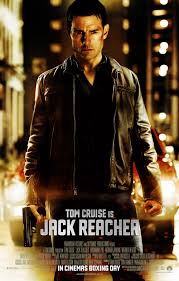
FIGHT LIKE BATMAN, JOHN WICK AND JACK REACHER

The Winter Haven Judo Club is expanding by offering more programs. So get on board with our Close Quarter Combatives programs. YOU can now learn the REAL fighting systems used in such films as Batman Begins, John Wick and Jack Reacher. No one else, and I literally mean, no one, in Florida offers what Winter Haven Judo does. 2018 will be our best year yet.

                          
                                                      EXTREME CLOSE QUARTER COMBATIVES
                                                                     FIGHT LIKE JOHN WICK


Judo is a martial art, a combat sport and an Olympic sport. Judo also has the distinction of being an extreme Close Quarter Combatives system used by Military, Police and Government agencies all over the world.

Actor Keanu Reeves underwent extensive training in judo for ALL of his fight scenes in the movies John Wick and John Wick Chapter 2.

                                                              FEBRUARY 2018 NEW PROGRAM
                                                                       FIGHT LIKE BATMAN


Learn how to engage multiple attackers with DNA Fight Science, formerly known as KFM/Keysi Fighting Method. KFM is an extreme close quarter combative system developed to quickly neutralize an attack involving one or multiple assailants.


KFM was a relatively obscure until it was featured in the movie ‘Batman Begins’ and it’s subsequent sequels.
         
                                                               ALSO BEGINNING IN FEBRUARY
                                                                  FIGHT LIKE JACK REACHER


The evolution of KFM called DNA Defense Labs, was then featured in Jack Reacher and its sequel, being utilized by the main character, played by Tom Cruise.

DNA/KFM training cultivates a ‘fighting spirit’, the predator/prey mentality and the drills develop this attitude to get you to flip that ‘switch’ in your mind that stops you thinking that you will become a victim and turns you into a ball of energy that is ready to fight.

                                                                    S.P.E.A.R. SYSTEM
An easy to learn personal defensive tactics system based off our own natural innate response to danger. Another highly effective, practical and tactical extreme Close Quarter Combatives system.


Dont trust your training to just anyone. Learn from a licensed and qualified instructor. Start the new year off right. For more info email me at winterhavenjudo@gmail.com 

THE INSTRUCTOR


In his 30 plus year career Barron Shepherd has attained Black Belts in Judo, Kajukenbo, Kenpo and Shotokan. He has attained multiple coaching and instructorships, certified Judo coach, Spear System coach and a Defense Labs Instructor to name a few. 

Monday, June 26, 2017

JUDO AND LAW ENFORCEMENT: Control and Arrest

Judo has been practiced by police in Japan since 1886 when the Tokyo police department sponsored a competition between the new Kodokan Judo school and older jujitsu schools. After the Judo students soundly defeated the jujitsu schools, the police adopted Judo training methods and techniques. The close association between Japanese police and Judo has continued from 1886 to this very day. Judo has since been used in training for police and military forces around the world.

The duties of a law enforcement officer focus on protecting people and property. They patrol the areas they are assigned, which sometimes include entire jurisdictions, respond to calls, enforce laws,  and make arrests. Law enforcement officers are subjected on a daily basis to two primary complaints, one is that the cops are brutal and rude and the other is that they don’t do enough to stop crime.  On one had they are deemed as being too tough on the other they aren’t doing enough. Balancing more “compassionate” policing with more effective law enforcement is one of the great challenges facing law enforcement agencies today.

The highest probability of assaults against police officers is during the point of the officer’s first contact with a suspect, often during the process of trying to bring an individual into custody. The officer encounters suspects who willfully "resist" arrest, they want to fight, hurt or kill the officer. In some cases it's an ego thing, they ARE looking to be restrained or they don't want to look like a punk and go quietly. In these instances the suspect knows that the officer is not trying to kill him or her, so they resist.

The main goal of policing, whether it is lethal or non-lethal force, is compliance from the subject. However, law enforcement personnel find themselves under constant scrutiny regarding  their use-of-force, from  bystanders  screaming police brutality to the I-Phone Paparazzi  all the way through to the department, criminal, and civilian oversight type committees.  There are a lot of disadvantages when it comes to officers trying to make arrests. It is a complicated situation when the media chooses highlight the worst arrests and never reports on the good examples of officers taking someone into custody. 

The primary purpose of non-lethal force with law enforcement is to get the suspect to comply. What is the most realistic way of getting someone to do something that they don't want to without seriously damaging them? The goal is to remove mobility from the subject and exert maximum control for handcuffing. The principle is that in order to handcuff a subject, an officer needs to control them first.

Judo has historically been an integral part of police training that focuses on control and compliance of a subject.  The control and arrest techniques (renkoho waza In Japanese) found in Judo, were developed to assist in controlling suspects enabling  the law enforcement officer to force compliance and to move a subject without having to use excessive or deadly force. These techniques also provide the officer(s) a low-key, effective means of taking a subject into custody and instill the skills and confidence that will assist in the effective and ethical use of force when it is required and most importantly will help keep the officer safe during this process.


 Judo control and arrest tactics are best suited to street-level policing and self defense. Though an arrest may start on the feet statics show us that approximately  80% of all arrests end on the ground.  Judo can quickly transition between standing and groundwork to tactically re-position or to go hands on when the opportunity presents itself to gain control/compliance of a subject. 

Saturday, June 24, 2017

JUDO BREAK FALLING AND BULLYING


At some point in most children’s lives they will have to contend with a bully or some type of bullying. This can have a devastating effect on your child. I very often see children brought to Judo because of it. So, how does Judo help a child with coping with a bully?

Bullies target children who will be hurt physically or emotionally by them. .

Bullies pick victims that they think will be easy targets. What makes an easy target? A child who seems weak, unsure of herself, or easily scared. Judo helps stop bullying by building up the child’s confidence so that they are able to project an aura of strength and ensure that they are not perceived as easy targets.

 Although Judo is a sport there is the physical self defense aspect of doing Judo. Your child will learn skills that they ‘could’ use to defend themselves physically. Your child will, having done Judo, know how to take physical hurt better than others.

One of the very first things a beginning judo student learns is how to break their fall, should the bullying become physical in nature, your child will be best equipped to cope with it. Knowing how to fall protects the student from injury in training, in competition and for self defense purposes. If you fall badly either from being pushed down, knocked down or tripped, you could get seriously hurt.

A typical bullying tactic in school is to trip the victim as they pass by. A student of Judo will learn to do a forward rolling breakfall, gracefully rolling after the trip rather than falling. That will take the wind from the bully’s sails and more than likely earn your child some respect from the other kids for their “cool judo roll!!!"

How to break your fall in Judo

Break falling techniques are a safe method of falling that all practitioners of judo learn. An Integral part of Judo is knowing how to break your fall. Judo concentrates on throwing your partner to the mat in training, so knowing how to fall is essential especially if you want you and your partner to be able to get up again to continue to train. Knowing how to fall protects you from injury in training, in competition and for self defense purposes. If you fall badly either from being pushed down, Knocked down, tripped, thrown or slammed to the ground  in a fight you risk disabling injury.

Break falling techniques (Ukemi) allow you to hit the ground without any kind of damaging impact and recover without injury. Basically, break falling techniques spread the impact of a fall over the widest area possible allowing the person getting thrown to disperse that force over that area.  Okay physics time!!!!! Break falls work by using the laws of physics. Pressure is the key force here. Pressure (P) is defined as unit of force (F) per unit of area (A), in mathematical form: P=F/A. When you do a break fall, more of you hits the ground. So this means that a larger area makes impact. Because the force of impact is divided by the area, more area means less pressure. Less pressure means less damage.

In addition, as you learn to be more and more comfortable with falling you become more relaxed. By learning how to place your body correctly and thereby learning to relax as you fall you disperse the force thus reducing the chance of injury. The more relaxed you are also lessens the chance of being injured.

BASIC BREAK FALLS
Break fall drills begin gently and from low postures. As the student progresses they are performed faster and from higher postures.

BACK BREAK FALLS (Ushiro Ukemi)
Squat low, crossing your arms in front of you, and fall backward in a rolling motion up your back, keeping your chin tucked in and slap the mat hard as you fall.  As you fall, slap the mat with both of your arms, striking it with the forearm and hand. It is utmost important to be relaxed and to keep your chin tucked in to prevent striking your head against the mat.


SIDE BREAK FALLS (Yoko Ukemi)
From a squatting position, raise your right arm out in front and across your body, and step out with your right foot. You will now lose your balance and naturally fall to your right side As you fall, to keep your head from hitting the mat keep your chin tucked in tightly to your chest, looking down toward your right foot. Slap the mat hard with your right forearm and hand as you land on your back and let your feet down on the mat. It is important that your feet do not touch each other when falling sideways, as the bones striking each other may cause injury.
Resume the squatting position and practice falling to the left, reversing the above directions. The sideways fall is the most important method of falling in Judo.

FORWARD ROLL BREAK FALLS ( Zenpo Kaiten Ukemi)
Step forward with your right foot, raising your right hand in front of you and curving the fingers inward. Bend forward at the waist, touching the mat lightly with both hands at the same time step forward with the right foot bending at the knee. basically executing a shoulder roll keeping your chin tucked in to avoid hitting your head on the mat. Keep your arms relaxed as you tumble, and do not straighten your arms. As you land on your back, slap the mat hard with your left hand.

Sunday, February 7, 2016

THE REALITY OF A KNIFE ATTACK: PART 2

First and foremost I want to say that one cannot defend themselves from a knife attack by simply reading an article. You should study the subject of knife fighting in depth. Yes, you really need to have a strong understanding of what you are doing and what is really going on. 

TYPES OF KNIFE ATTACKERS

The first type is the stone-cold killer type he is most likely an ex-con. He will kill without hesitation to avoid going back to the jail. A wanted felon with a history of violent crimes also certainly fits this profile. His attack will appear to come out of nowhere.

An opportunity attacker is someone who initiates a spontaneous attack.  He has no plan to attack anyone; he just sees an opportunity and in a split second decides to attack.

A criminal caught in the act of a crime could react violently and attack in an effort to get away. He does not set out to attack or to kill anyone, but in such a situation he believes he has been forced to react with violence. This is another surprise attack, but not pre-planned.

The mentally disturbed attacker is most likely a homeless man or woman armed with a knife for reasons of paranoia or protection.

People under the influence of alcohol or drugs can fall under the same category.  The drug-induced frenzy; a crackhead or meth freak who has gone over the edge and has grabbed a knife.

TYPES OF KNIFE ATTACKS

(1) Thrust. The thrust is the most common and most dangerous type of knife attack. It is a strike directed straight into the target by jabbing or lunging.
(2) Slash. The slash is a sweeping surface cut or circular slash. The wound is usually a long cut, varying from a slight surface cut to a deep gash.
(3) Tear. The tear is a cut made by dragging the tip of the blade across the body to create a ripping-type cut.
(4) Hack. The hack is delivered by using the knife to block or chop with.

The sewing machine a rapid fire stabbing attack. It is a truly deadly attack and the intent is to kill you. It is carried out in a series of short thrusts while moving forward with violent pressure to keep you moving backward in a vulnerable and reactive type state.

The slash and stab is the scenario you hope you never have to face. This attacker is usually the most skilled in the use of an edged weapon. This attacker is set upon killing you and has both the skill and intent to do so.

REACTING TO THE ATTACK

Rule 1: Present the least vulnerable target. If someone is shooting at you, you find cover. The same principle applies here. If you are physically attacked, you move, you angle, you put something between you and the attack.

Rule 2: Stop the offensive capability of the attacker as soon as possible. This is where your actual physical training kicks in. This is where you must turn reaction into action and turn the tables on your assailant

Rule 3: Gain control of the individual. This is the final aspect where your training comes into play. However, this principle can only be applied if you have successfully applied rules 1 and 2. Rule 3 is where you take final control of the attacker. The best way to control the weapon is to take control of the individual. “You have far more to fear from a deadly man than from a deadly weapon.”

The first thing that happens to you is your reaction to the attack. This is where your mind is simply saying  Oh No! or WTF is going on? What is Happening? You are basically frozen in time during this phase even if it lasts only a millisecond this provides plenty of opportunity for the attacker to get in one, two, or maybe even three strikes, especially when you are caught totally off guard.

The second phase is when your protective instincts kick in. This is a pure fight or flight mechanism and your conscious mind is still not in control. The next thing that happens is that you start to move, usually backward, away from the danger: the attack.


You can actually practice the above sequence to increase its efficiency. By combining mental imagery with the physical actions I have just described you can decrease the time it takes to go from the “oh, no” phase to the protective phase.

HOW TO DEFEND AGAINST A KNIFE  ATTACK

The best defense against an armed attack is evasion and a well-timed counterattack.

1.) You must block and redirect the attack of the weapon to neutralize its lethal capability and clear the body of its trajectory of fire and angle of attack.

2.) You must stabilize the weapon by controlling the wrist, hand and weapon of the attacking arm of the enemy.

3.) You proceed to disarm the weapon by breaking the joint of the locked extremity or simply by applying power to induce enough pain for control and disarmament. 

Sunday, January 31, 2016

KNIFE FIGHTING

A knife fight is a violent physical confrontation between two or more combatants in which one or more participants is armed with a knife.  A knife fight is defined by the presence of a knife as a weapon and the violent intent of the combatants to kill or incapacitate each other; the participants may be completely untrained, self-taught, or trained in one or more formal or informal systems of knife fighting. Knife fights may involve the use of any type of knife, though certain knives, termed fighting knives, are purposely designed for such confrontations – the dagger being just one example.

Modern tactics for knife combat were developed by two British members of the Shanghai Municipal Police of the International Settlement in the 1920s. At the time the Shanghai streets were rife with criminal activity, exacerbated by the political tensions of the time and the breakdown of social order in much of the country.

Captain William E. Fairbairn and Sergeant Eric A. Sykes developed knife fighting skills and defences, which they began teaching to both police recruits and members of the British Army, Royal Marines and U.S. Marine units then stationed in Shanghai.  Fairbairn reportedly engaged in hundreds of street fights in his twenty-year career in Shanghai, where he organized and headed a special anti-riot squad.  Much of his body – arms, legs, torso, and even the palms of his hands – was covered with scars from knife wounds from those fights.

During World War II, Fairbairn and Sykes continued to refine their knife fighting techniques for military and paramilitary forces, teaching British Commandos, Special Operations Executive (SOE) personnel, selected American and foreign soldiers and covert espionage personnel, including members of the American Office of Strategic Services (OSS) and US/UK combined Operation Jedburgh teams. Their experience in training both soldiers and civilians in quick-kill knife fighting techniques eventually led to the development of a specialized fighting dagger suited for both covert elimination of enemy sentinels and close-combat knife fighting, the Fairbairn-Sykes Fighting Knife, a landmark weapon of its type.

The knife was designed exclusively for surprise attack and fighting, with a slender blade that can easily penetrate a ribcage. The vase handle grants precise grip, and the blade's design is especially suited to its use as a fighting knife. Fairbairn's rationale is in his book Get Tough! (1942).

In close-quarters fighting there is no more deadly weapon than the knife. In choosing a knife there are two important factors to bear in mind: balance and keenness. The hilt should fit easily in your hand, and the blade should not be so heavy that it tends to drag the hilt from your fingers in a loose grip. It is essential that the blade have a sharp stabbing point and good cutting edges, because an artery torn through (as against a clean cut) tends to contract and stop the bleeding. If a main artery is cleanly severed, the wounded man will quickly lose consciousness and die.

The length of the blade was chosen to give several inches of blade to penetrate the body after passing through the 3 in (7.6 cm) of the thickest clothing that was anticipated to be worn in the war, namely that of Soviet greatcoats. Later production runs of the F–S fighting knife have a blade length that is about 7.5 in (19 cm).


In all cases the handle had a distinctive foil-like grip to enable a number of handling options. Many variations on the F–S fighting knife exist in regards to size of blade and particularly of handle. The design has influenced the design of knives throughout the many decades since its introduction. - WIKIPEDIA

HAND TO HAND COMBAT

Hand-to-hand combat (sometimes abbreviated as HTH or H2H) is a lethal or non-lethal physical confrontation between two or more persons at very short range (grappling distance) that does not involve the use of firearms or other distance weapons. While the phrase "hand-to-hand" appears to refer to unarmed combat, the term is generic and may include use of striking weapons used at grappling distance such as knives, sticks, batons, or improvised weapons such as entrenching tools.[1] While the term hand-to-hand combat originally referred principally to engagements by combatants on the battlefield, it can also refer to any personal physical engagement by two or more people, including law enforcement officers, civilians, and criminals.

Combat within close quarters (to a range just beyond grappling distance) is commonly termed close combat or close-quarters combat. It may include lethal and non-lethal weapons and methods depending upon the restrictions imposed by civilian law, military rules of engagement, or ethical codes. Close combat using firearms or other distance weapons by military combatants at the tactical level is modernly referred to as close quarter battle. The United States Army uses the term combatives to describe various military fighting systems used in hand-to-hand combat training, systems which may incorporate eclectic techniques from several different martial arts and combat sports.

Close Quarters Combat, or World War II combatives, was largely codified by William Ewart Fairbairn and Eric Anthony Sykes. Also known for their eponymous Fairbairn-Sykes fighting knife, Fairbairn and Sykes had worked in the Shanghai Municipal Police of the International Settlement (1854-1943) of Shanghai in the 1920s, widely acknowledged as the most dangerous port city in the world due to a heavy opium trade run by organized crime (the Chinese Triads).

After the May Thirtieth Movement riots, which resulted in a police massacre, Fairbairn was charged with developing an auxiliary squad for riot control and aggressive policing. After absorbing the most appropriate elements from a variety of martial-arts experts, from China, Japan and elsewhere, he condensed these arts into a practical combat system he called Defendu. He and his police team went on to field-test these skills on the streets of Shanghai; Fairbairn himself used his combat system effectively in over 2000 documented encounters, including over 600 lethal-force engagements.[2] The aim of his combat system was simply to be as brutally effective as possible. It was also a system that, unlike traditional Eastern martial-arts that required years of intensive training, could be digested by recruits relatively quickly. The method incorporated training in point shooting and gun combat techniques, as well as the effective use of more ad hoc weapons such as chairs or table legs.

During the Second World War, Fairbairn was brought back to Britain, and, after demonstrating the effectiveness of his techniques, was recruited to train the British commandos in his combat method. During this period, he expanded his 'Shanghai Method' into the 'Silent Killing Close Quarters Combat method' for military application. This became standard combat training for all British Special Operations personnel. He also designed the pioneering Fairbairn-Sykes fighting knife, which was adopted for use by British and American Special Forces. In 1942, he published a textbook for close quarters combat training called Get Tough.

U.S. Army officers Rex Applegate and Anthony Biddle were taught Fairbairn's methods at a training facility in Scotland, and adopted the program for the training of OSS operatives at a newly opened camp near Lake Ontario in Canada. Applegate published his work in 1943, called Kill or Get Killed. During the war, training was provided to British Commandos, the Devil's Brigade, OSS, U.S. Army Rangers and Marine Raiders.

Other combat systems designed for military combat were introduced elsewhere, including European Unifight, Soviet/Russian Sambo, Army hand-to-hand fight and Systema, Chinese military Sanshou/Sanda, Israeli Kapap and Krav Maga. The prevalence and style of hand-to-hand combat training often changes based on perceived need. Elite units such as special forces and commando units tend to place higher emphasis on hand-to-hand combat training.

Although hand-to-hand fighting was accorded less importance in major militaries after World War II, insurgency conflicts such as the Vietnam War, low intensity conflict and urban warfare have prompted many armies to pay more attention to this form of combat. When such fighting includes firearms designed for close-in fighting, it is often referred to as Close Quarters Battle (CQB) at the platoon or squad level, or Military Operations on Urban Terrain (MOUT) at higher tactical levels.  - WIKIPEDIA